

Loss, Love, and the Lessons
In 2018, I faced more loss than ever before. My paternal grandmother, Walt, passed away at 99. My great-aunt Virginia, with whom I shared a bond as deep as with any grandparent, passed at 100. A month later, her sister—my maternal grandmother Laura—died at 104.
My uncle John faced advanced pancreatic cancer and died soon after his mother, my grandma Laura. His death was a heavy blow. He is the first of my parents’ siblings to face a terminal illness, and it feels as if the walls of my family’s history are slowly closing in.
This was a sobering dose of reality before the wave of deaths that happened around me (like most of us) during the pandemic. I’ve mourned, gathered, and written eulogies—sometimes from afar when I couldn’t attend services. In that solitude, I’ve spent a lot of time thinking about death. Painful as this has been, some insights have emerged—quiet but profound.

Exploring Death Through Words
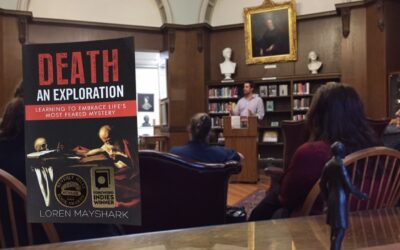
It’s been just under ten years since I published Death: An Exploration. Writing that book immersed me in the subject in ways few willingly attempt. I examined what great thinkers, writers, and spiritual leaders have said about the end of life—and I found myself transformed by the process.
In the United States, we often avoid the topic altogether. Conversations rarely go beyond the standard “thoughts and prayers.” Writing the book allowed me to wade into the murky depths most people fear to even glance at.
I’m grateful that I was able to share the book with both of my grandmothers and with Aunt Virginia while they were still alive. We talked about it together, and I’ll cherish those exchanges forever. Hearing later from family members, friends, and even strangers that my words offered them comfort reminded me that art—especially writing—can ripple out in ways you can never predict.

The Writer’s Doubt and the Gift of Connection
Before the book was released, I worried. How would people react to such a personal meditation on mortality? Would it comfort them—or trouble them further?
To my relief, readers responded with warmth. Some said the book changed how they viewed death. Others said it helped them make peace with loss. Knowing that my private reflections had meaning for others affirmed something important: if I hadn’t written it, nothing would have changed—neither in me nor in anyone else.
Through the act of writing and sharing, I became a different person. Death remains inevitable, but talking about it somehow makes life feel more immediate and precious.
Growing Beyond Fear
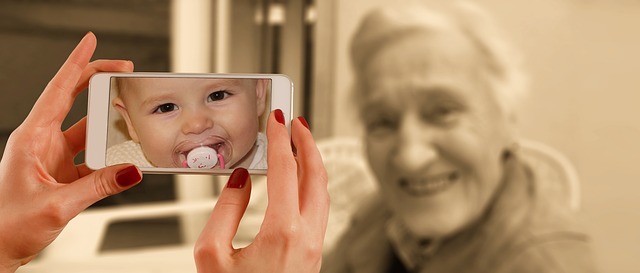
As we grow older, we can’t afford to cling to a childlike fear of death. Many still see it as dark, cruel, or unnatural—but death is none of these. It’s a coda to life, a closing note that gives meaning to the melody. It serves a purpose not just for individuals but for humanity as a whole.
Our awareness of death—both our own and that of others—shapes how we live. The human mind churns through tens of thousands of thoughts every day, many of them shadowed by the awareness that everything we love is temporary. The loss of others magnifies that truth. Each passing reminds us of our own impermanence and, paradoxically, of the urgency to live.
The Show Before the Finale
I invite you to spend time contemplating death—not morbidly, but honestly. Read books, listen to music, or watch films that explore mortality. Meditate on it.
I have come to better understand an old Latin phrase that has been a guiding light for centuries of those willing to take a long look at death. Memento mori—Latin for “remember you must die.” It’s a philosophical reminder that life is finite.
Rather than being morbid, it encourages clarity about what truly matters. By acknowledging mortality, we’re less likely to waste time on trivial concerns and more likely to act with purpose, gratitude, and urgency. It can ground us, sharpen our priorities, and deepen our appreciation for the present moment.
So take a little time to contemplate the end. When you do, something changes. Once you’ve faced the end, the days that remain feel brighter, more vivid. You stop being terrified by death and start being amazed by life.
Death will come one day—so live all the rest.
0 Comments