

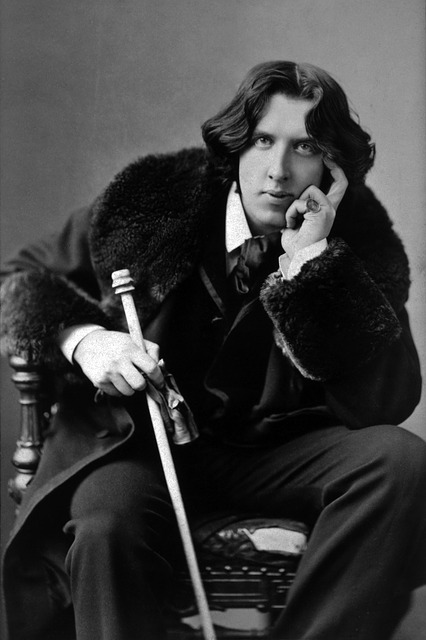
Dorian Gray, the beautiful young protagonist of Oscar Wilde’s The Picture of Dorian Gray, is granted a terrible gift: eternal youth purchased by transferring all consequences of his indulgence, cruelty, and corruption into a portrait that ages in his place. As he spirals into excess, the painting absorbs the reality of his moral decay—until the truth becomes impossible to escape.
Wilde’s story forces us to consider a difficult question: What price do we pay for our indulgences—individually and collectively?
It also prompted me to reflect on aging, stress, and self-deception, and ultimately on the global role of the United States today. In Wilde’s tale I found an unsettling parallel between Dorian’s hidden portrait and the increasingly visible cracks in the American façade.
A Young Nation With an Old Appetite
How does a relatively young country, born out of colonial liberation, find itself locked in a near-perpetual cycle of warfare? How did a nation once idealized for its opportunities and vast landscapes become synonymous with excess, obesity, and infrastructure decay?
The parallels with the decline of the Roman Empire are hard to ignore.
A land once mythologized as a frontier of hope is now crisscrossed by highways, choked with pollution, and governed by a political system often paralyzed by dysfunction.
Dorian’s power is tied to his portrait; America’s power has long been anchored in its military dominance. Both derive strength through a mechanism that ultimately corrodes what it was meant to protect.

The Hidden Costs of Hegemony
Dorian’s indulgence is enabled by a supernatural loophole. America’s is fueled by its command of global resources and military influence.
This indulgence has consequences.
The Second Iraq War alone destroyed hundreds of thousands of lives—American and Iraqi alike—while unraveling regional stability on a historic scale. Yet Iraq is only one example among dozens of interventions justified by strategic interests, resource competition, or ideological ambition.
Just as Dorian’s painting absorbs his moral damage, the world has absorbed the fallout of America’s overreach. And now those consequences are beginning to return home.
The Cracking Portrait: America’s Internal Unraveling
In Wilde’s novel, Dorian eventually confronts the grotesque portrait that reflects his true condition.
Likewise, America’s internal fractures—once dismissed or concealed—are becoming harder to ignore.
Economic inequality, rampant unemployment and underemployment, political polarization, violence, soaring healthcare crises, and widespread mental distress all reveal a society struggling beneath its own mythology.
The excesses of the elite border on the absurd: multiple mansions, private islands, fleets of cars and jets. The ultra-wealthy possess fortunes exceeding the GDP of entire nations, while millions struggle to afford rent, healthcare, or even groceries.
Meanwhile, the average American has internalized the dream of extraordinary wealth and celebrity, even as the structural conditions enabling upward mobility continue to erode.
Indulgence Without Accountability
Dorian Gray never feels the physical effects of his corruption. The consequences are outsourced to the portrait, leaving him free to gorge on pleasure and power.
The United States has similarly mortgaged its future through massive debt, deregulated markets, aggressive foreign interventions, and unsustainable consumption. The reckoning always comes eventually:
- social alienation
- chronic illness
- widespread depression
- addiction
- mass shootings
- political extremism
- decaying communities
These are the fissures surfacing in the national portrait. They are signs of a country attempting to maintain the illusion of normalcy while the underlying structure threatens collapse.

Wilde’s Warning for a Modern Empire
In the final act of Wilde’s novel, Dorian attempts to destroy the painting, only to destroy himself. The truth can be postponed—but not erased.
The United States stands at a similar crossroads. After decades of war, exploitation, environmental damage, and widening social divides, the consequences are returning like a karmic rebound. The signs are unmistakable:
- failing infrastructure
- mass shootings
- overfilled prisons
- an ever-expanding wealth gap
A nation once symbolized by promise now risks becoming a distorted reflection of its own ideals.
Like Dorian Gray, America must confront its true self—its portrait—before the damage becomes irreversible.

0 Comments